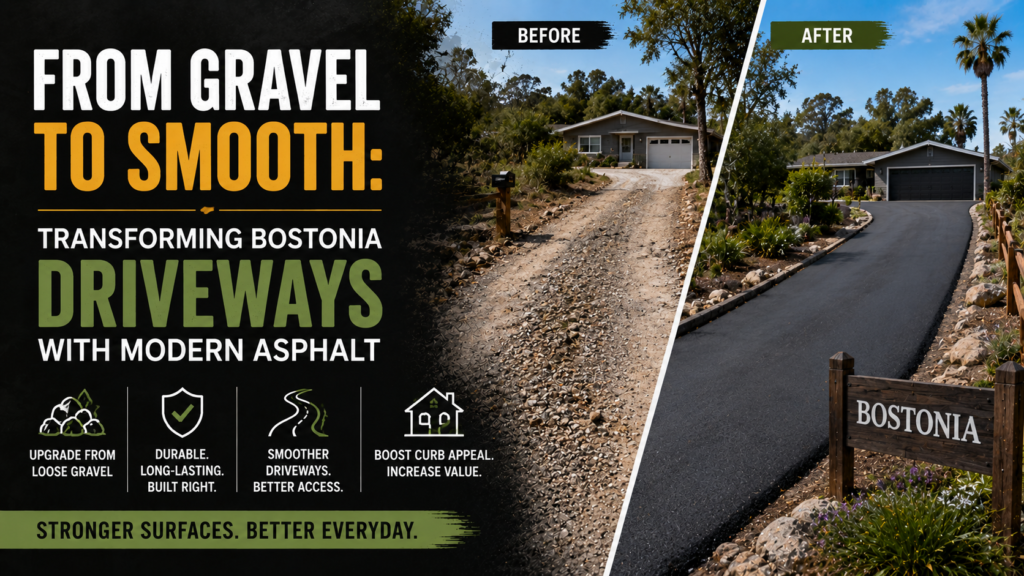
Bostonia is a community that bridges the gap between San Diego’s urban core and East County’s rural charm. Many homes in Bostonia still feature original gravel or dirt driveways that have been there for decades. While gravel has its place, modern asphalt offers a transformative upgrade in terms of comfort, safety, and property value. Working with a professional Asphalt Contractor Bostonia relies on means understanding the journey from rough gravel to smooth, durable pavement.
The Hidden Costs of Gravel
At first glance, gravel driveways appear economical. The material is cheap, and installation seems simple. However, gravel carries hidden costs that accumulate over time.
First, gravel requires constant maintenance. A gravel driveway needs to be graded (leveled) every 1-2 years to remove potholes and washboarding. Grading costs money or requires equipment ownership. Second, gravel migrates. Vehicle tires kick gravel into the street, onto the lawn, and into your home. Replacing lost gravel adds to the long-term cost. Third, gravel creates dust. Fine particles become airborne, coating cars, infiltrating homes, and potentially causing respiratory issues.
When you add up 20 years of grading, replacement gravel, and dust-related cleaning, a gravel driveway often costs more than asphalt.
The Comfort Factor
Asphalt is smooth. That simple fact transforms daily life. A smooth driveway means:
- No rattling of car interior components
- No jarring bumps when walking to the mailbox
- Easy snow removal (though rare in Bostonia)
- Smooth rolling for trash cans, strollers, and wheelchairs
For families with young children, a smooth surface means safer bike riding and scooter use. For older adults, it means reduced trip hazards. The quality-of-life improvement from asphalt is immediate and significant.
No More Mud
Bostonia receives enough winter rain to turn gravel driveways into mud pits. When the base layer of a gravel driveway saturates, vehicles sink in, creating deep ruts. Mud sticks to shoes and is tracked into homes and cars. Pets return from outside covered in mud.
Asphalt is impermeable. Rain runs off the surface rather than soaking in. Even during the heaviest storm, an asphalt driveway remains firm and clean. The transition from muddy misery to all-weather access is one of the most appreciated benefits reported by new asphalt owners.
Property Value Considerations
Real estate professionals consistently note that paved driveways increase home value. A 2022 study by the National Association of Realtors found that a paved driveway adds approximately 5,000 10,000 to a home’s resale value in San Diego County, depending on the neighborhood.
Buyers perceive asphalt as permanent, low-maintenance, and aesthetically pleasing. A gravel driveway, in contrast, signals “work needed” to many buyers. For those considering selling their Bostonia home in the next 5-10 years, paving the driveway is one of the highest-ROI exterior improvements available.
Aesthetics and Curb Appeal
There is no denying that asphalt looks better than gravel. A fresh, black asphalt driveway creates a crisp frame for a home’s landscape. It provides visual contrast with green lawns and colorful gardens.
Beyond basic black, asphalt can be customized. Exposed aggregate asphalt (where the top layer is removed to reveal decorative stones) offers a textured, upscale look. Colored asphalt is also available using mineral pigments, though it costs more than standard black. For most Bostonia homeowners, standard black asphalt with clean, straight edges provides excellent curb appeal.
The Installation Process: What to Expect
For property owners who have never seen asphalt installed, the process can seem mysterious. Here is a straightforward overview:
- Removal: If an existing gravel or concrete driveway is present, it must be removed. Gravel is scraped up. Concrete is broken with a jackhammer and hauled away.
- Grading: The native soil is shaped to create the proper slope and crown for drainage. Low spots are filled, high spots are cut down.
- Base Installation: 4-6 inches of crushed aggregate base rock is spread and compacted. This is the structural heart of the driveway. Compaction is achieved using a vibratory roller.
- Tack Coat: A thin layer of liquid asphalt emulsion is sprayed onto the base to glue the new asphalt in place.
- Paving: Hot mix asphalt (typically 300°F) is dumped from trucks, spread by a paving machine, and smoothed to the correct thickness (2-3 inches for residential driveways).
- Compaction: A steel drum roller compresses the hot asphalt, removing air voids and achieving final density.
- Curing: The asphalt cools and hardens. Driveways can typically be used within 24-48 hours, though full curing takes 90 days.
Transitioning from Gravel to Asphalt
Converting an existing gravel driveway to asphalt is straightforward, but the gravel must be properly prepared. Simply paving over loose gravel results in failure because the gravel will shift under the asphalt.
The correct approach is to remove the top layer of gravel, compact the remaining base, add fresh crushed rock as needed, and then pave. The existing gravel can sometimes be mixed with new aggregate and recycled as the base layer, saving money and material.
Noise Reduction
An often-overlooked benefit of asphalt is noise reduction. Gravel driveways generate a loud crunching sound every time a vehicle passes. Asphalt is quiet. The reduction in ambient noise is noticeable, especially for homes near the street or for early morning departures that might wake family members.
All-Weather Access
Bostonia’s weather is mild but not dry. When winter storms arrive, a gravel driveway can become impassable for low-clearance vehicles. Mud and ruts trap cars. Asphalt provides reliable access 365 days per year. Emergency vehicles, delivery drivers, and guests will never be turned away by a mud hole.
Environmental Benefits
Asphalt is 100% recyclable, making it an environmentally responsible choice. When an asphalt driveway eventually reaches the end of its life (typically 20-30 years), the old asphalt can be milled up, crushed, and used as aggregate in new asphalt or as base rock for other projects.
Additionally, asphalt pavements reduce fuel consumption for vehicles. The smooth surface reduces rolling resistance, meaning cars use less fuel driving on asphalt than on gravel or dirt. Over the lifespan of a driveway, this fuel saving adds up.
Making the Decision
Transitioning from gravel to asphalt is a significant decision for Bostonia homeowners. The upfront investment is real, but the long-term benefits reduced maintenance, increased property value, improved safety, and enhanced comfort make it one of the smartest home improvement choices available.
For those ready to make the switch, understanding the process and the properties of asphalt ensures a successful project and decades of smooth, reliable service.